Scaling Design
Organizing design ecosystems within complex organizations
Companies typically evolve in predictable ways as they grow. In startups, design needs are relatively simple. A small team working on a single product often hires generalists to perform tasks typical of multiple roles. In addition to designing products, a designer might also create marketing illustrations, produce animated tutorials, or contribute to brand development. And while decisions are made quickly, design guidance is often left undocumented and shared informally through conversation.
As startups grow, so does the complexity of their businesses. New teams are formed to enter new markets, serve new customer segments, or expand existing offerings. Here, speed to market is often prioritized, but over time it can introduce organizational inefficiencies. Product designers across different teams may share certain component designs and code yet repeatedly define the same sign-in flows. Motion designers producing videos may independently determine text sizes and voiceover styles that should have already been standardized. In these environments, work becomes more expensive to produce, less consistent in quality, and contributes to accumulating design debt.
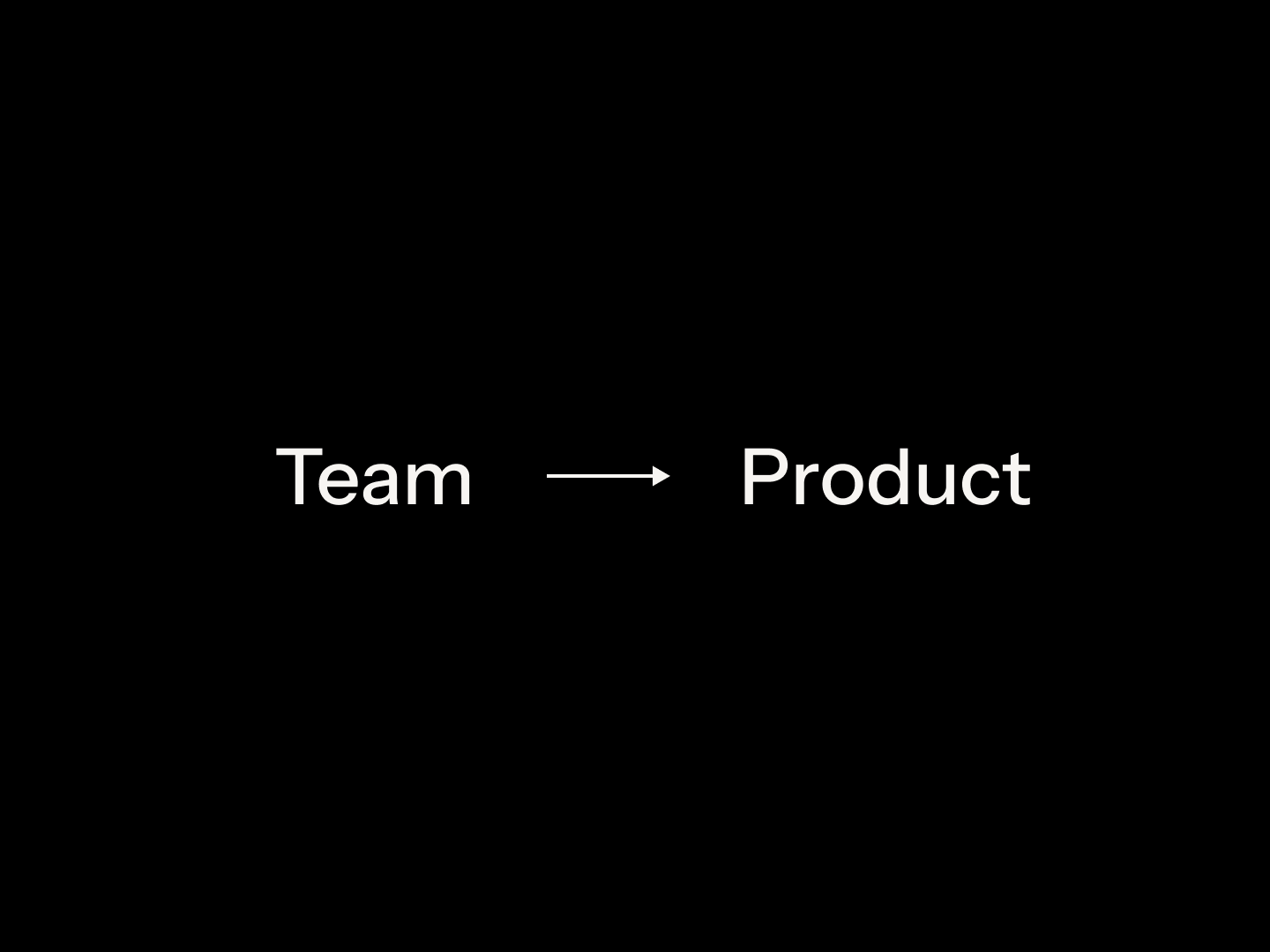
Early-stage startups typically have one team focused on a single product.
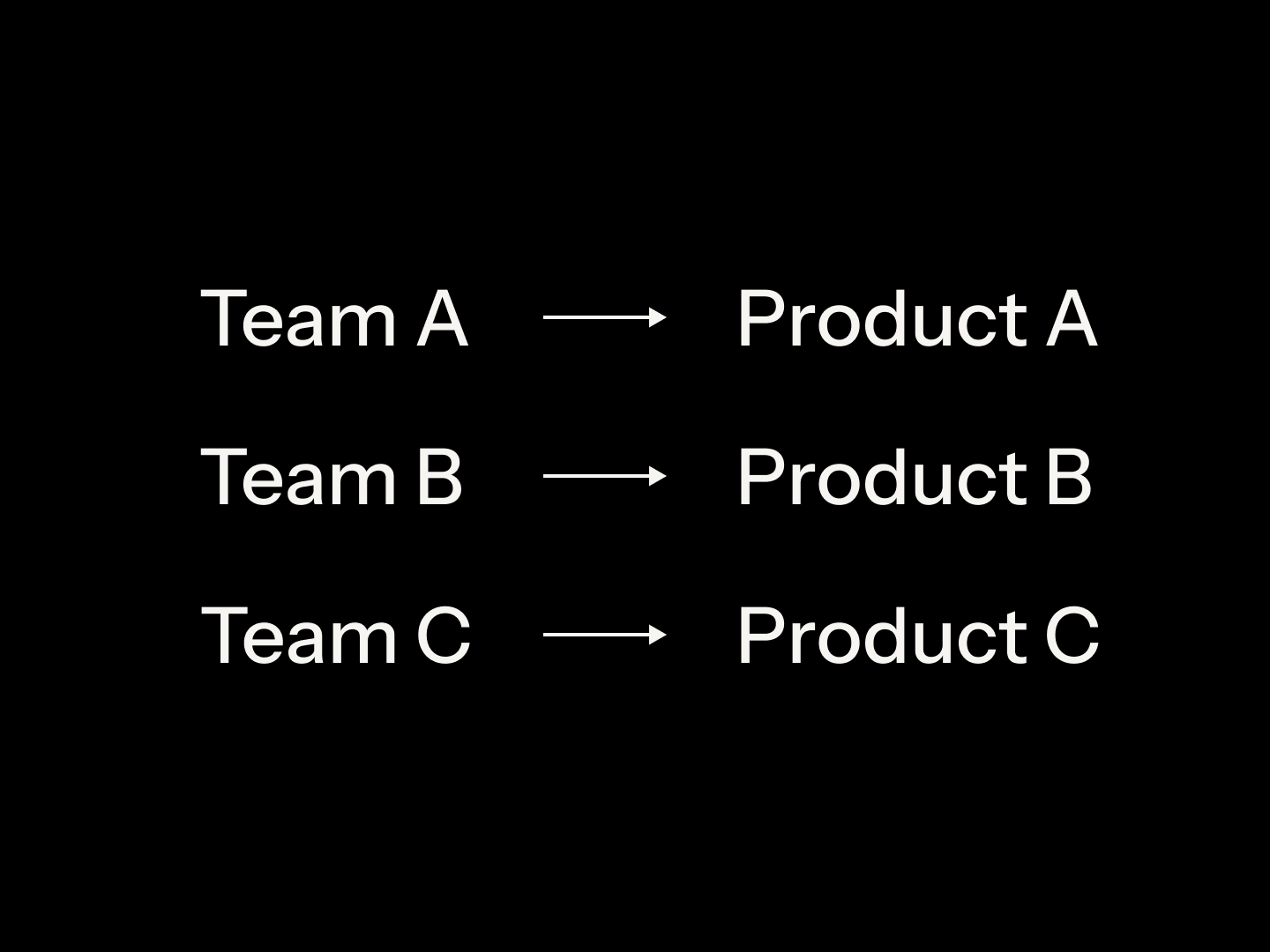
Growing companies may form teams rapidly, sometimes at the expense of operational efficiency.
Eventually, companies reorganize to improve coordination among teams. Related responsibilities are grouped together, shared services are established, and roles become more specialized. These changes clarify ownership and improve coordination among teams, but they also introduce additional dependencies, organizational layers, and slower decision-making.
Mature design organizations frame their product design systems around the ideas of Atomic Design, which was first introduced by Brad Frost. It provides a useful framework for understanding how design systems can be organized. Simple components combine into increasingly sophisticated structures, creating clear relationships between foundational elements and complete user experiences. This approach promotes consistency, encourages reuse, and allows design systems to scale.
While product design as a discipline has matured, many adjacent design disciplines have not received the same level of taxonomic rigor. Product design systems govern the on-screen expression of a brand, but what about office spaces, live events, or marketing campaigns? These, too, need to answer the same questions around typography, color, motion, imagery, and composition.
Principles
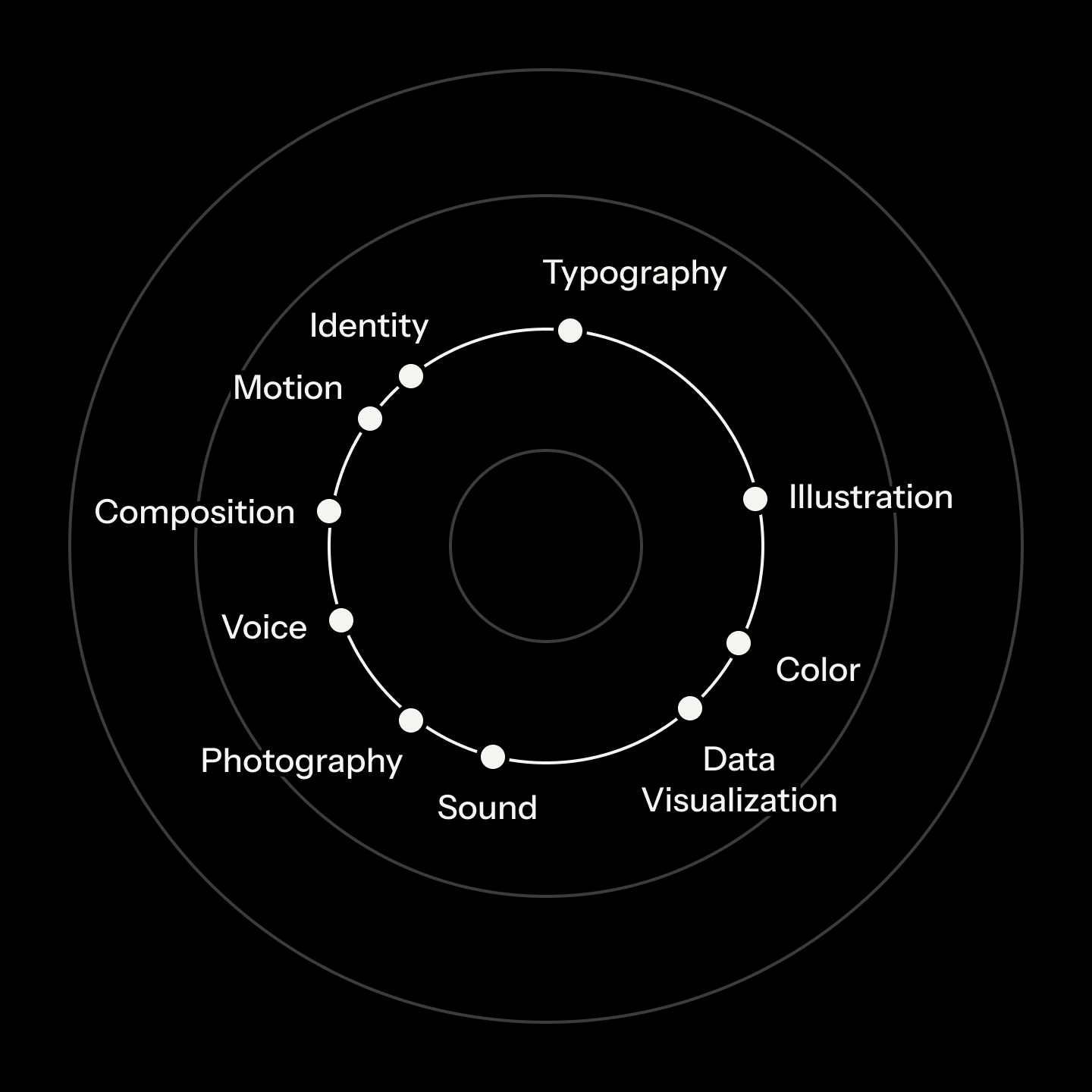
Disciplines
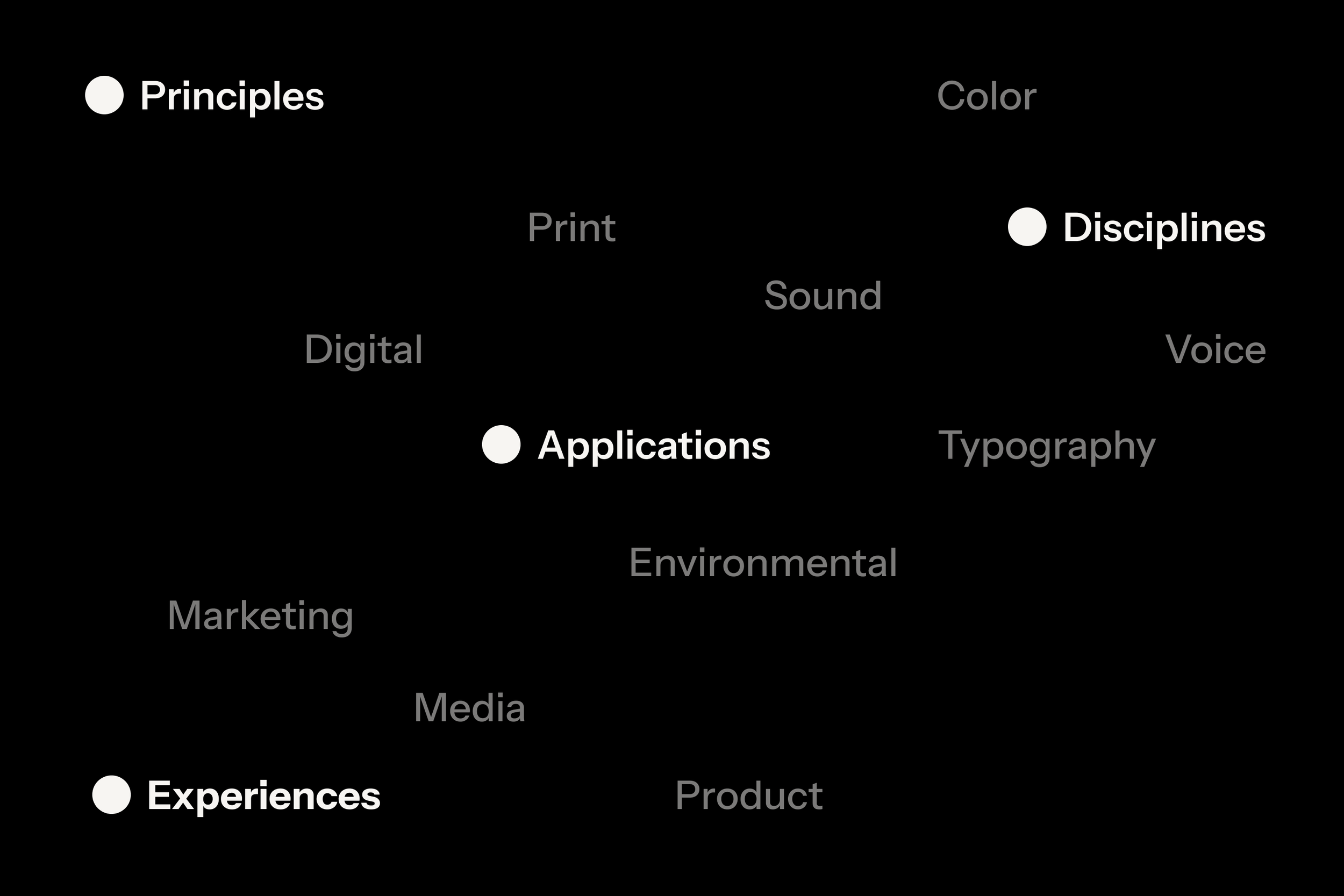
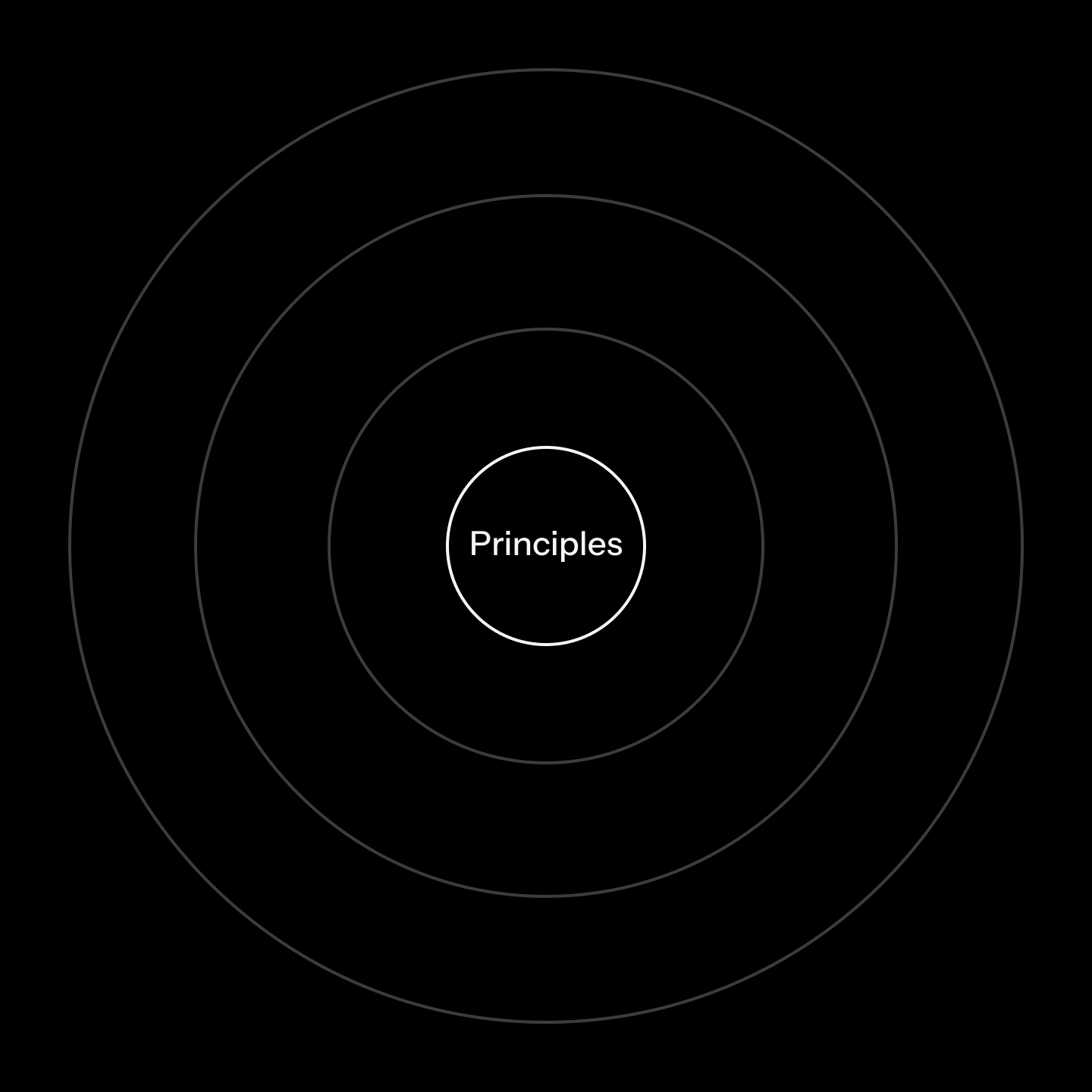
At its core, a design organization should be guided by a shared set of principles. Derived from the company’s mission and brand strategy, these principles define how design should look, sound, feel, and be experienced. Just as importantly, they also establish boundaries. Is the brand playful? If so, how playful? Principles provide a common foundation for every design decision that follows.
The next layer consists of individual elements of design, or disciplines, that are broadly defined against the principles. Like the atoms and molecules of a product design system, colors and palettes are defined, typefaces are selected, and typographic relationships are established. Motion, photography, illustration, sound, and voice are similarly named and described. These disciplines define what is stylistically possible for the brand.
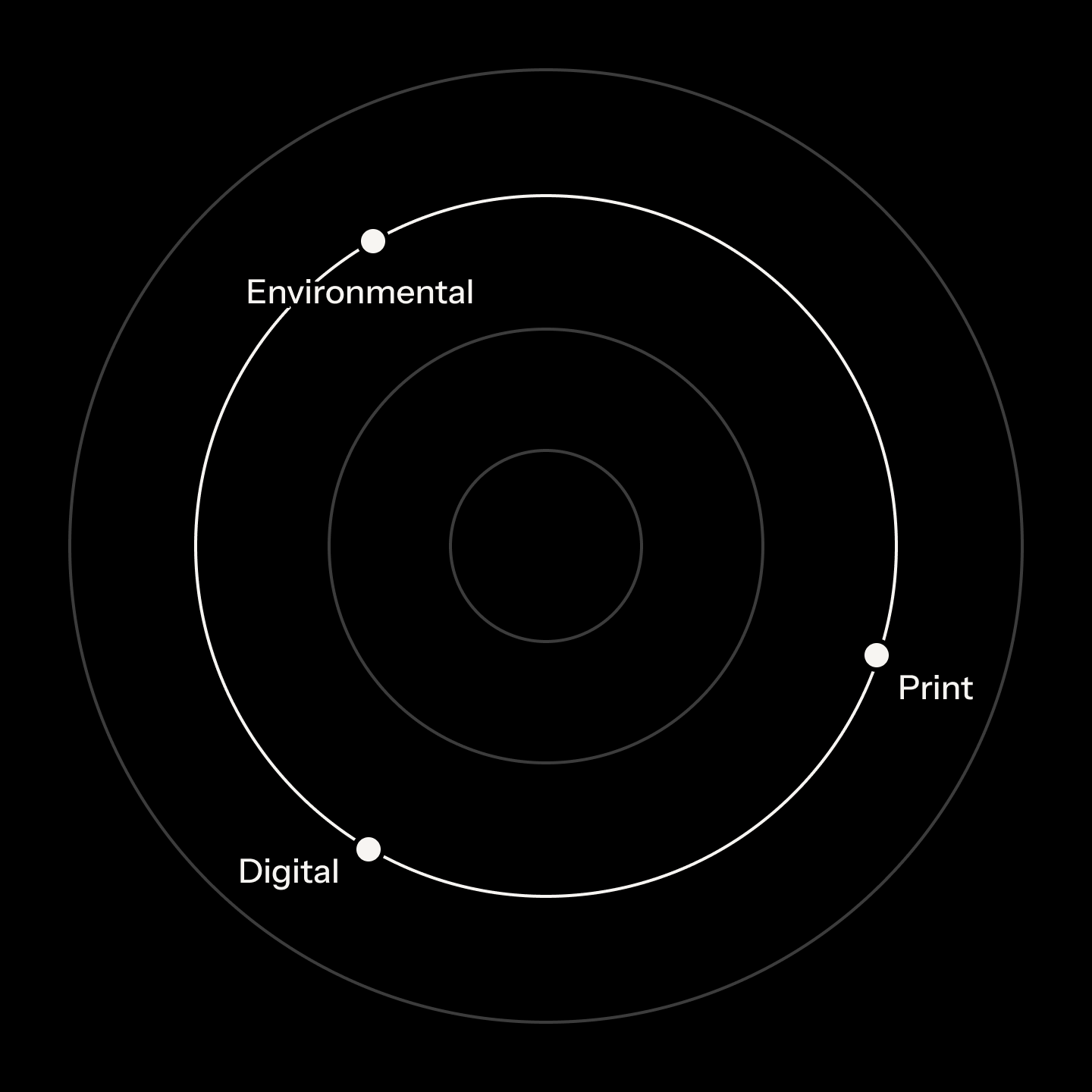
Applications
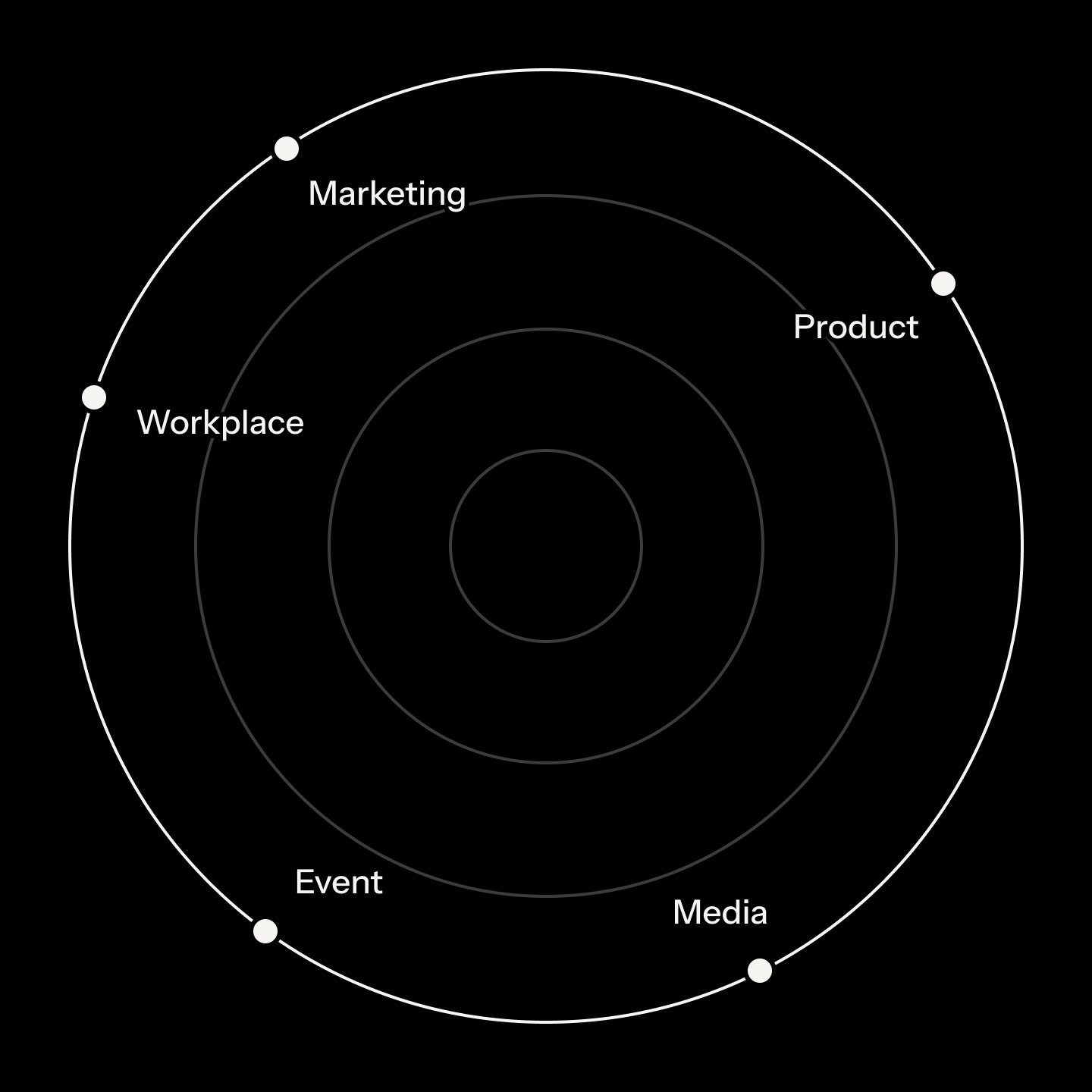
Experiences
Next, disciplines are translated into medium-specific guidance. Digital colors are defined in HEX and RGB values and its palette mapped to light and dark themes. In physical environments, those same colors may be specified in RAL or Pantone values and its palette matched to the function and character of a given space. This layer transforms abstract design disciplines into applied systems of tools and reusable libraries tailored to a specific medium.
The outermost layer is where designers engage directly with users. Because they understand what users need and want, they assemble elements from the discipline and application layers into full experiences. Product teams create interfaces and define workflows. Event designers curate wayfinding signage, printed collateral, ambient audio, and motion graphics into immersive live experiences. And marketing teams develop reusable messaging frameworks, audience-specific content libraries, email templates, and campaign flows. This layer defines what is appropriate for a particular audience, context, and objective.
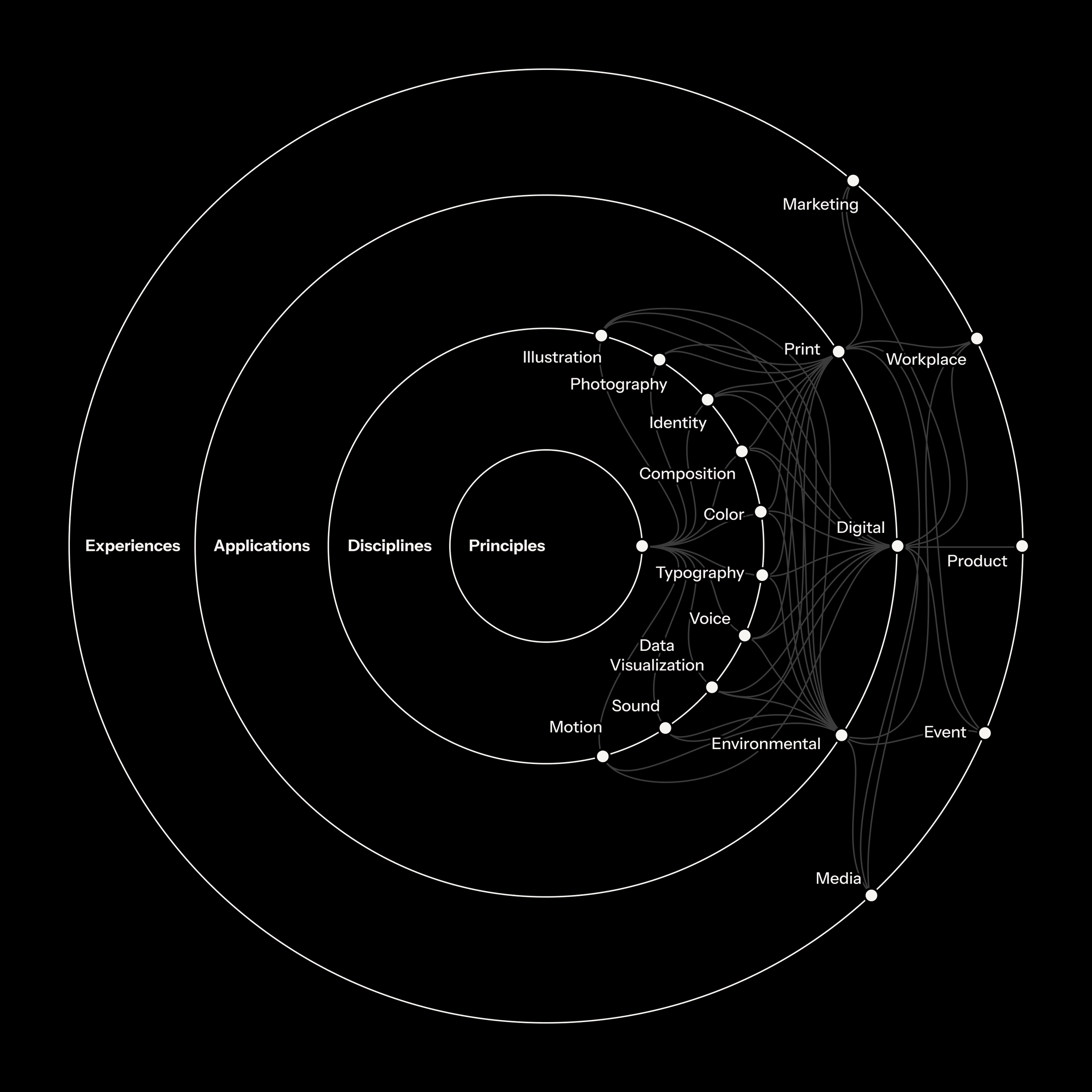
Viewed together, these layers form a connected system of systems, or ecosystem, centered around the company’s mission. Moving outward, each layer becomes more specific, tactical, and closer to the end user. Changes in one layer inevitably affect others, creating a single living ecosystem of governance rather than a static hierarchy. The boundaries between layers also create convenient opportunities for feedback and governance.
In practice, companies are in constant flux: teams evolve, responsibilities shift, and business priorities change. While it’s unlikely that each element of the ecosystem is managed by its own dedicated team, the model provides a useful framework for clarifying ownership and accountability across a company’s design function.
By treating design as an interconnected ecosystem rather than a collection of isolated functions, teams can more easily identify gaps, reduce decision fatigue, and scale effectively. The result is a better balance between coordination and agility, enabling companies to adapt to ever-evolving market conditions.
Image text set in Instrument Sans.
Brand Identity
Design Operations
Systems Design